
Project Overview
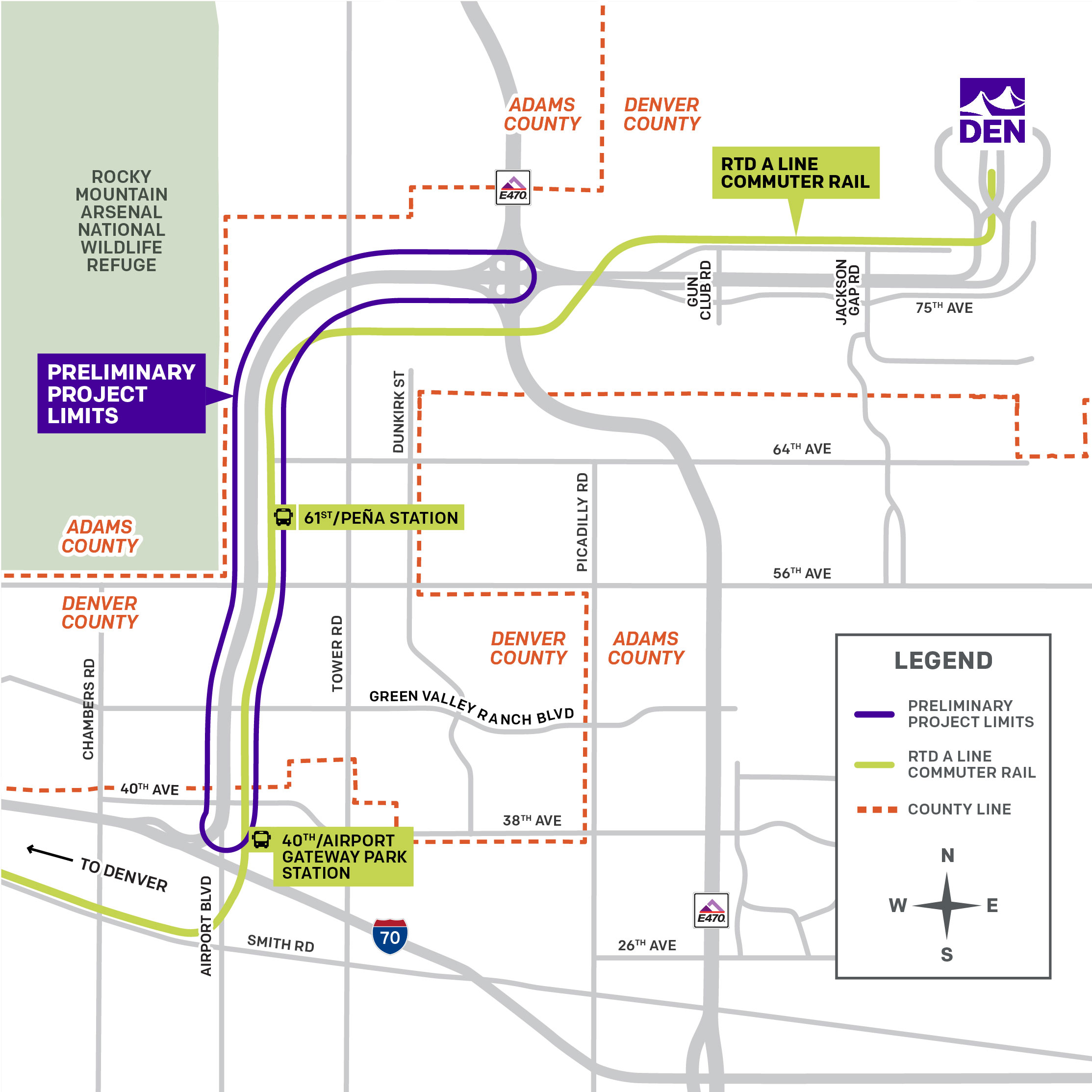
Denver International Airport (DEN) is conducting environmental review and design under the National Environmental Policy Act (NEPA) for improvements to the Peña corridor.
Lead Agencies


The Peña Corridor
What’s In a Name?
Peña Boulevard is named for former Denver Mayor Federico Peña, who championed the vision and creation of Denver International Airport.
Built For a New Era
Peña Boulevard, the new access road to Denver International Airport, was completed in 1993.
A Corridor That Keeps Colorado Moving
Approximately 3 times more people travel Peña Boulevard annually than pass through the Eisenhower-Johnson Memorial Tunnel.
An Alternative Way to Travel
Since 2016, RTD’s A Line has provided a direct rail connection between Denver Union Station and Denver International Airport. The corridor is also served by numerous regional and local bus routes, on-demand and fixed route shuttles, hotel shuttles, parking shuttles, Bustang, and private services.
A City of Opportunity
More people work at Denver International Airport than in the entire Denver Tech Center.
A Road of National Importance
The section between I-70 and E-470 is part of the National Highway System—roads essential to the nation’s economy, defense, and mobility.
Planning Background
Part of DEN’s Vision 100—our plan to serve 100 million annual passengers—focuses on maintaining our infrastructure. Peña Boulevard is the main way people get to and from DEN, and it is long overdue for upgrades. Ensuring a safe and efficient travel experience is necessary for us to serve those 100 million annual passengers we expect in the next several years.
- Phil Washington, DEN Chief Executive Officer

Strategic Plans
-

DEN: Vision 100
Vision 100 is phase one of the two phases of DEN’s strategic plan and is focused on preparing the airport to serve 100 million annual passengers in the next several years. -
DEN: Operation 2045
Operation 2045 is phase two and is focused on preparing the airport for its 50th anniversary in 2045 and for an expected 120 million-plus annual passengers. Both phases combined serve as a blueprint to align decision-making and accountability.
Supporting Regional Plans
-
City and County of Denver: Far Northeast Area Plan
Guide for how Montbello, Gateway-Green Valley Ranch, and parts of the Denver International Airport statistical neighborhoods should grow and evolve in the future, including a vision for mobility networks in far northeast neighborhoods. -
DRCOG: 2050 Metro Vision Regional Transportation Plan
Sets the long-range vision and investment framework for the region’s multimodal transportation system. It includes widening Peña Boulevard between I-70 and E-470 as a funded regional priority.
Setting the Stage for NEPA
The DEN Peña Boulevard Transportation and Mobility Master Plan and Transportation Demand Management Plan established a strong foundation for the NEPA (National Environmental Policy Act) process by collecting extensive data on existing conditions, completing detailed traffic modeling, and gathering broad stakeholder input through outreach, employee and traveler surveys.
Foundational DEN Plans
-
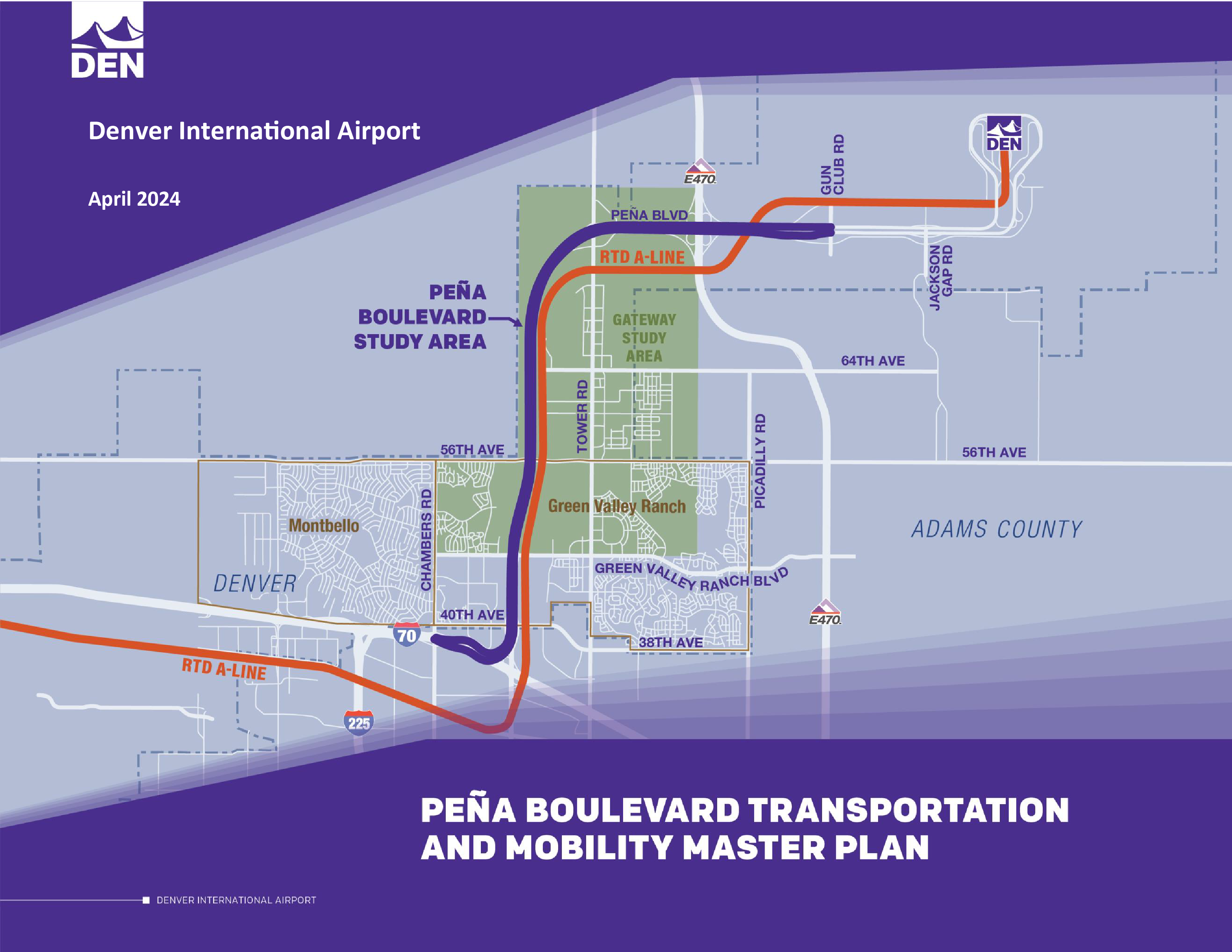
Peña Boulevard Transportation and Mobility Master Plan
The Peña Master Plan evaluated a wide range of improvement concepts—from minimal or operational changes (such as safety and transportation demand management strategies) to options with new lanes, frontage roads, or collector-distributor roads for local access. -
Transportation Demand Management Plan
The Transportation Demand Management Plan identified 20 priority strategies to reduce demand on Peña Boulevard and other roadways, reduce the environmental impacts associated with vehicle trips, and improve access to the airport for employees and passengers.
Thinking Beyond Driving Solo
Go To DEN encourages travelers and employees to choose alternatives to driving alone—like rail, bus, carpools, vanpools, bikes, and scooters—making airport trips easier, more affordable, and better for the environment. This program allows DEN to pilot early action Transportation Demand Management strategies.
A few strategies implemented so far
-

Improved bike and scooter storage
Earlier this year, DEN improved bike storage near the transit center by upgrading existing options. In response to the growing need for diverse micromobility solutions, scooter storage racks were installed in early 2025. DEN remains committed to enhancing sustainable transportation options and is continuing to look for ways to make further improvements—including exploring the potential installation of smart bike racks in the future. -
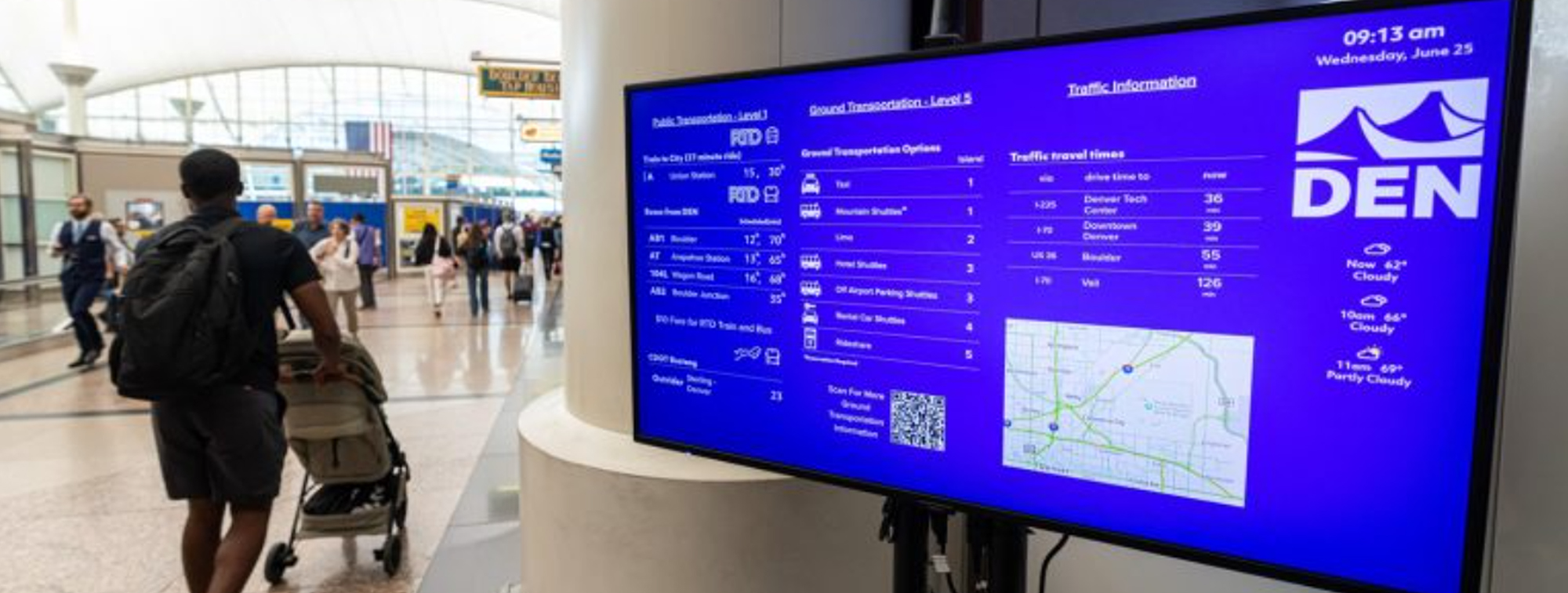
Transit screens
DEN is piloting a real-time transit screen in the Great Hall, to allow users to better plan their travel from DEN. This screen will include next arrival information for transit services, real-time traffic conditions, and other ground transportation information.


Learn more about the program’s additional strategies online at flydenver.com/go-to-den
What is NEPA?
Federal law requires agencies to evaluate the environmental effects of their actions and invite public input before making major decisions.
- NEPA (National Environmental Policy Act) is required because the project involves federal funding and strong public interest—to provide transparency and maintain eligibility for future federal support.
- The planning and preliminary design process is expected to take about two years, and construction could begin as soon as 2028.
NEPA: key steps for the project
On-Going Public Engagement Throughout the Peña NEPA & Design Project
-
Scoping
Identify corridor needs, priorities, and issues that will shape the project’s Purpose and Need statement for the environmental review. We are here 1 -
Alternatives Evaluation
Develop and assess a range of design and operational alternatives and identify which best meets corridor needs and aligns with community and airport goals. 2 -
Environmental Review and Draft Documentation
Document project development and Preferred Alternative, analyze environmental impacts, and develop mitigation measures. 3 -
Public Review
Share findings, provide opportunities for public comment, consider feedback, and supplement analysis or make corrections as appropriate. 4 -
Final Approval
Document decision and how comments were considered, outline mitigation commitments, and detail next steps. 5


Current State of the Peña Corridor
Built more than 30 years ago, much of Peña Boulevard no longer meets current design standards. Outdated geometric design - including substandard shoulders, acceleration, deceleration, and taper lengths - contribute to safety issues and unreliable operations.
Click on a network name to learn more.
Existing and Planned
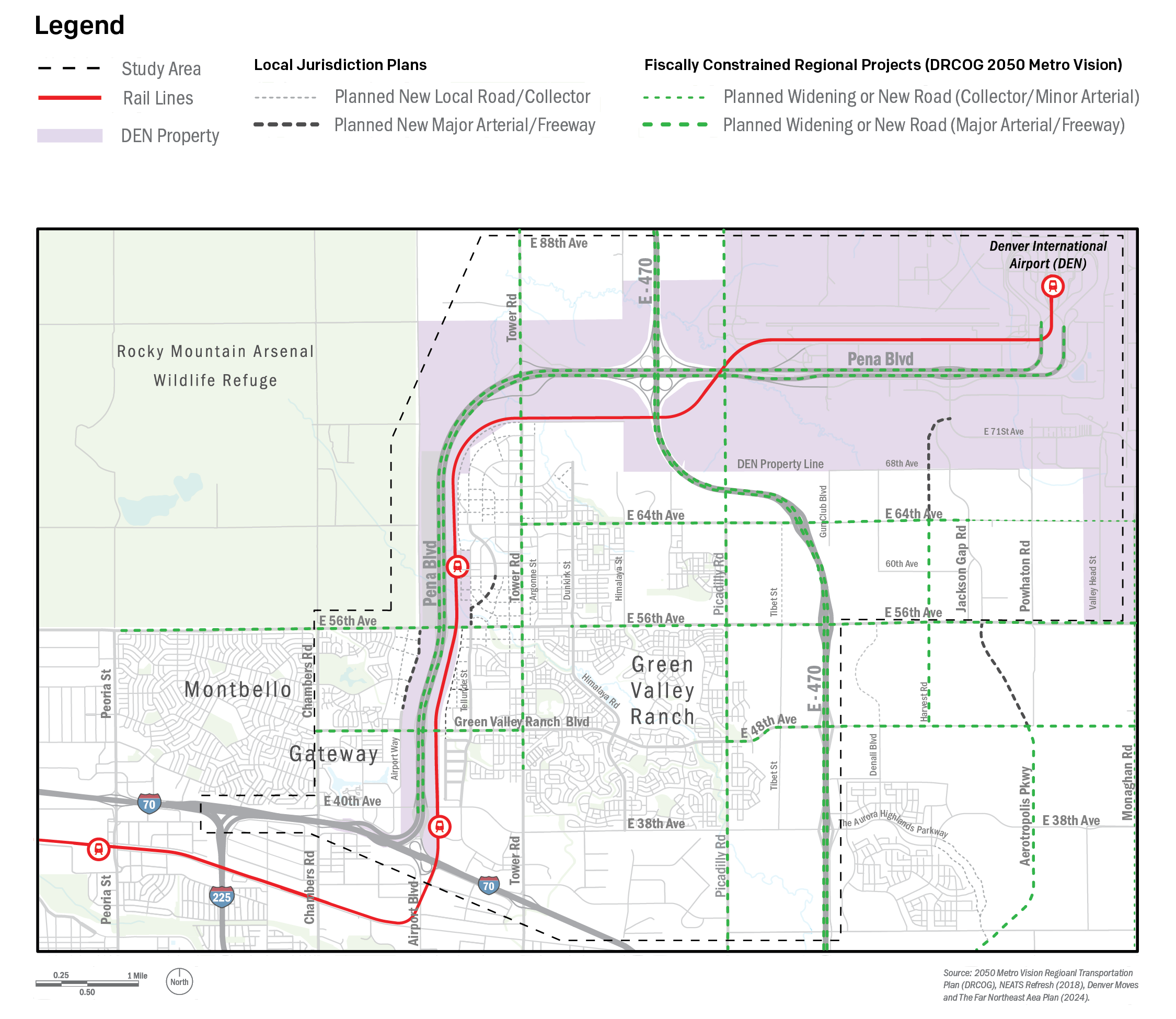
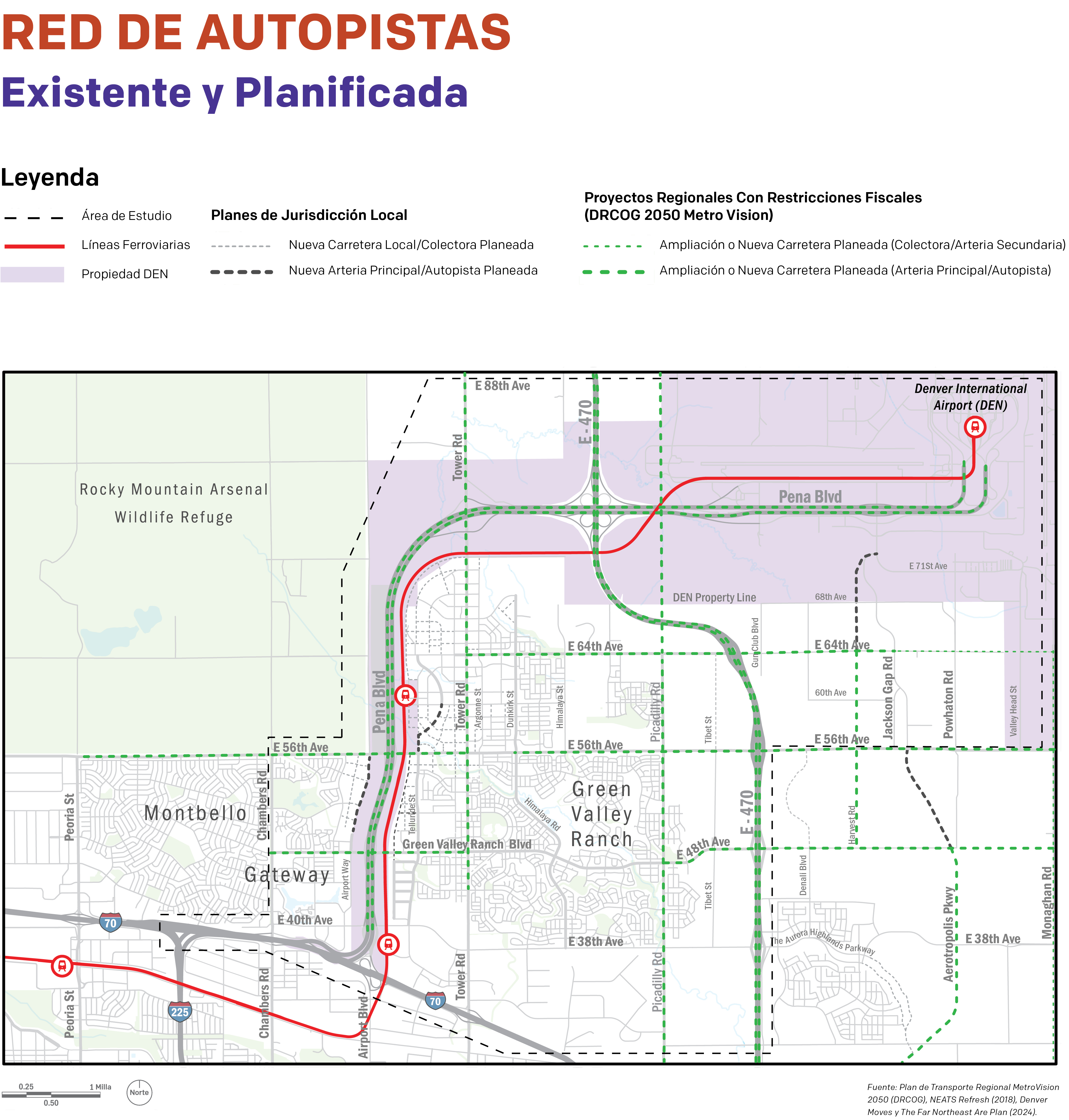
Existing
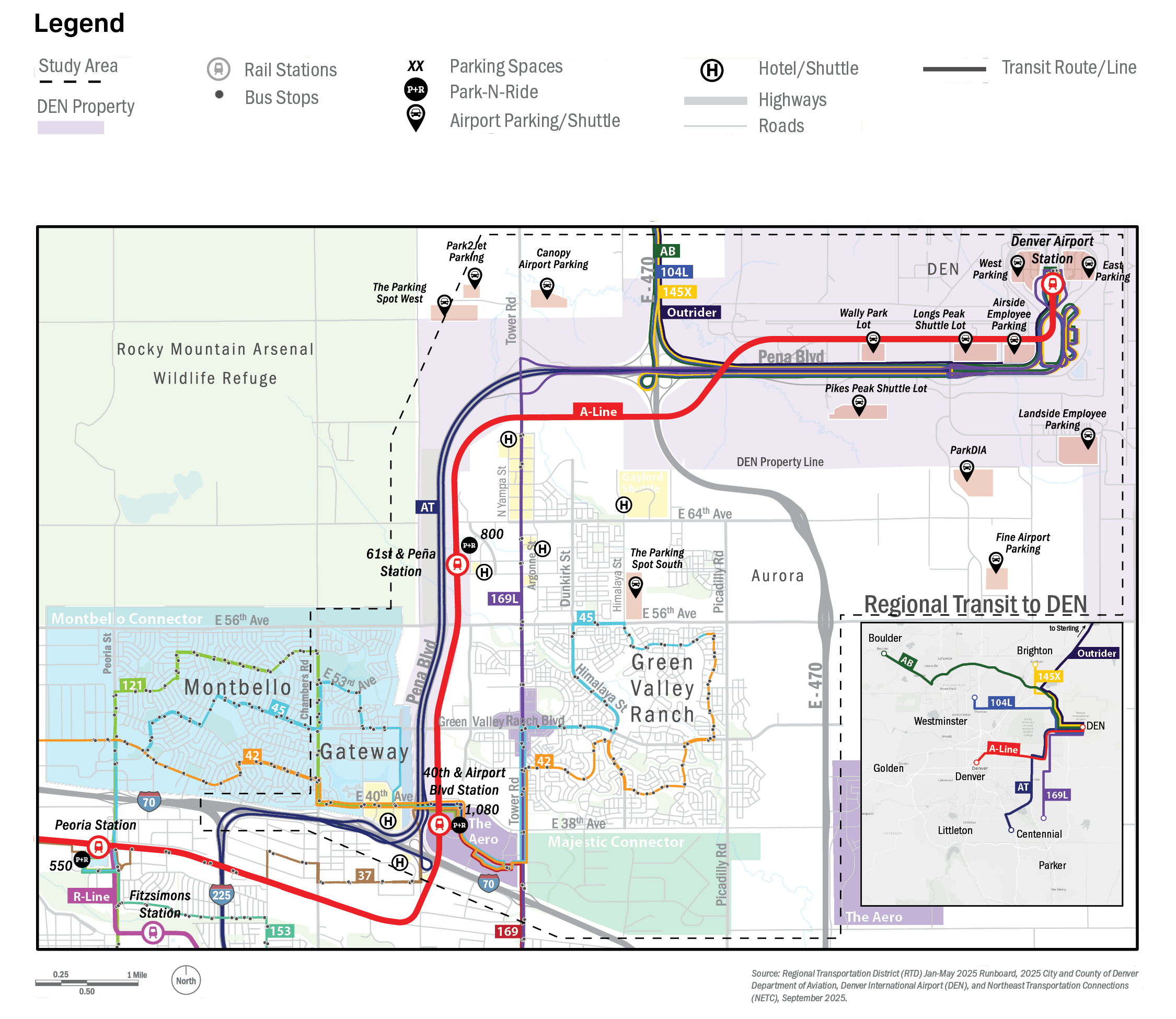
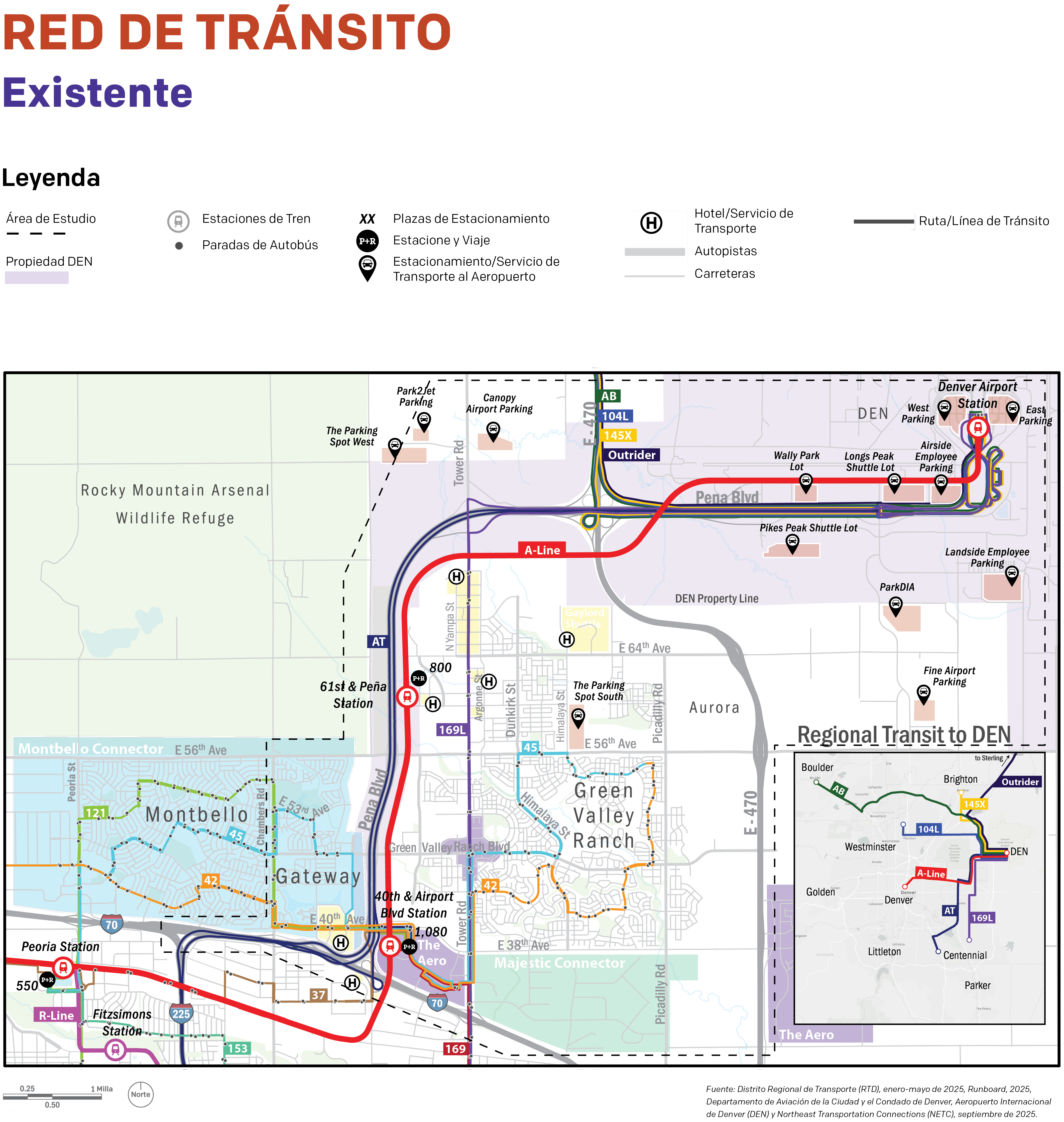
Existing and Planned
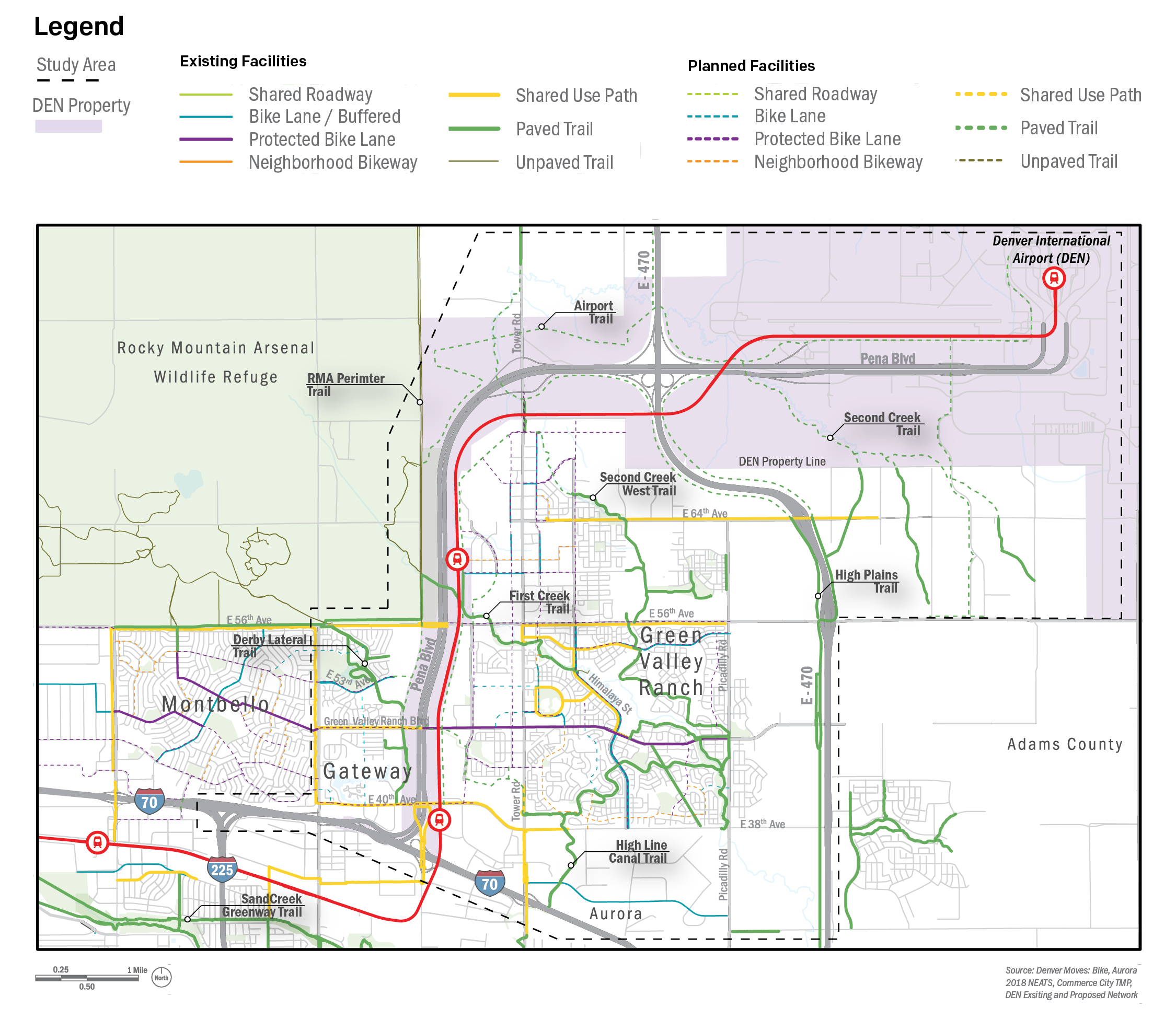
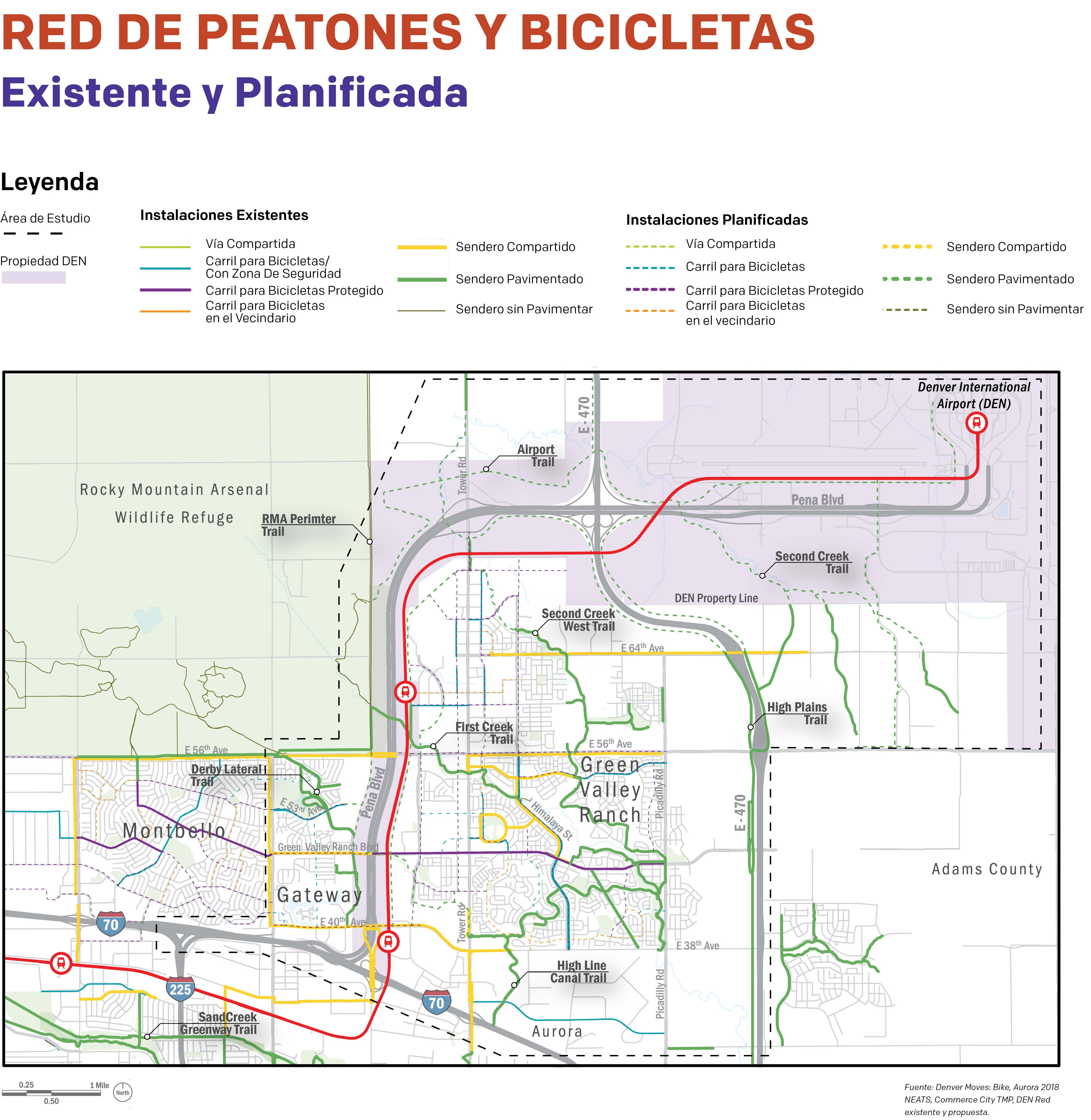
Interactive Comment Map
Please add comments along the map identifying the problem areas and issues you believe this project should solve.
Current Lane Configuration


Peña by the Numbers
Focusing safety upgrades where they’re needed most
The highest total crash rates on Peña Boulevard occur between 56th Avenue and 40th Avenue, a stretch which carries the heaviest traffic volumes on the Peña Boulevard study segment. A large number of crashes are rear end collisions, which are often caused by congested conditions.
Crashes on Peña Boulevard between I-70 and E-470 from 2019 to 2024

- No Injury 286
- Injury 89
- Fatal 2
Peña Boulevard Traffic Has Surged Beyond Expected Capacity
Volumes on Peña Boulevard have increased substantially over time with peak days exceeding 139,000 daily vehicles—far beyond the service level volume expectations for a four lane highway.
- DEN opened in 1995 and Peña Boulevard was originally designed to serve 50 million annual passengers
- Passenger volumes have grown 165% since opening, with DEN serving more than 82.3 million travelers in 2024
- DEN-generated economic impact was $47.2 billion in 2024


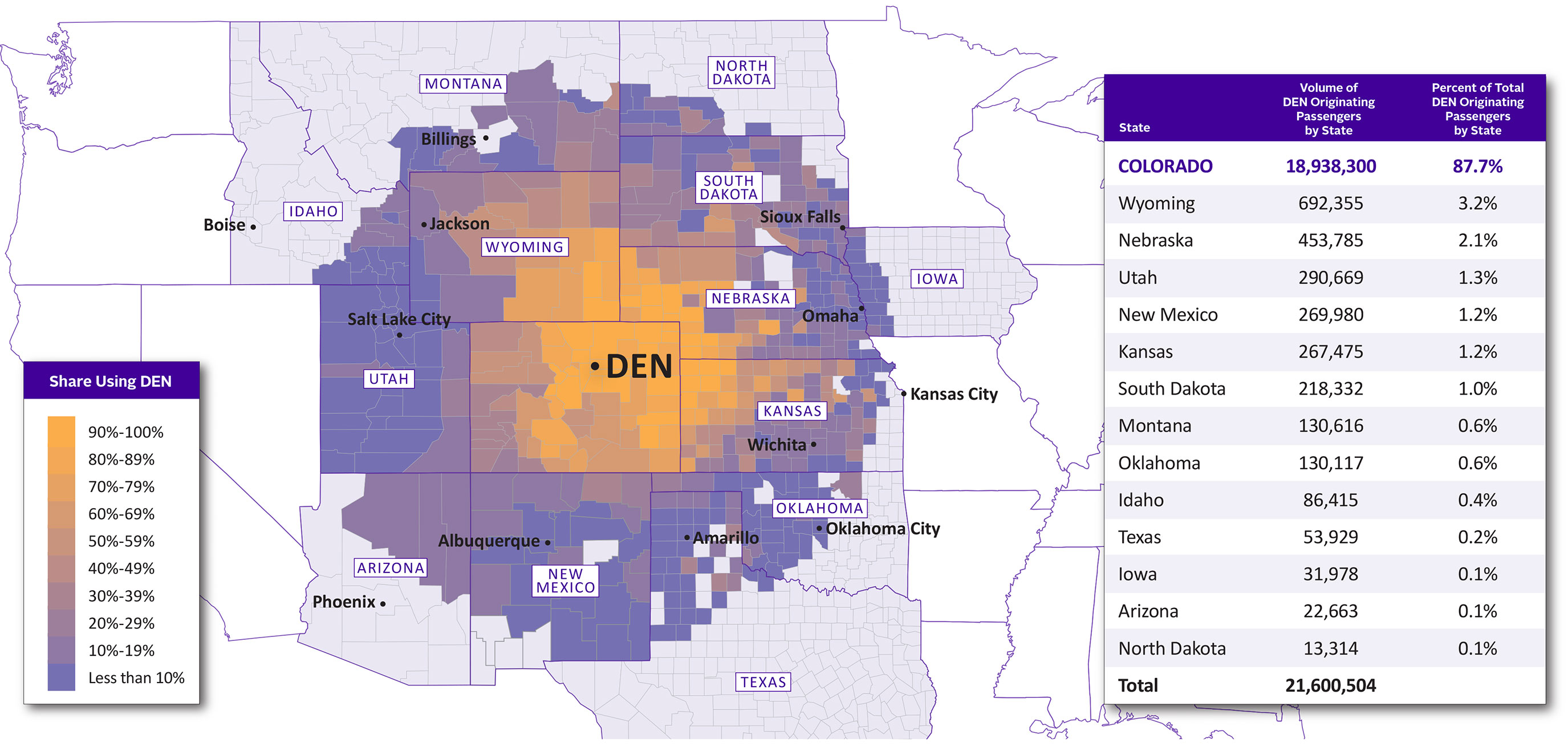
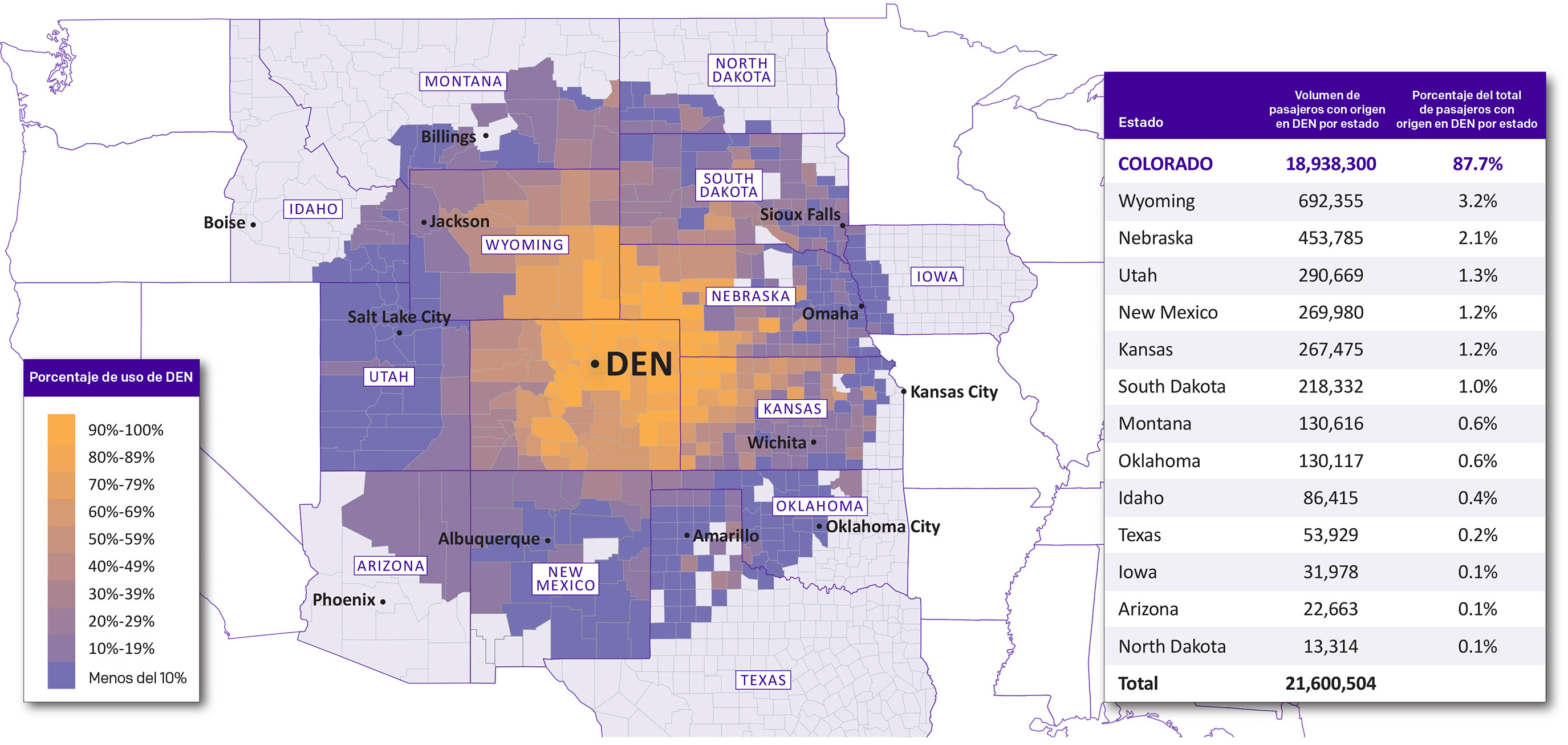
DEN’s central location powers regional travel
Located near the geographic center of the United States, DEN is the only major hub airport within a 500-mile radius and offers nonstop flights to more than 200 destinations. DEN attracts passengers from all over Colorado, as well as significant passenger numbers from the Mountain States and Midwest.
Preliminary Purpose and Need
Purpose
Improve the Peña corridor to provide safe, reliable, and efficient access for passengers, employees, and cargo traveling to and from DEN, ensuring the airport continues to function as a critical asset to Colorado and the region, while also supporting the mobility needs of surrounding communities.
Needs
-
Reduce crash frequency and severity
Improve safety through updated design standards and operational enhancements. -
Provide reliable airport access
Maintain smooth, predictable travel to and from DEN for passengers, employees, and cargo. -
Respond to growth in travel demand around DEN
Address increasing regional travel and development pressures that affect airport access and surrounding communities. -
Enhance travel options
Support more ways for travelers, employees, and neighbors to get to the airport—whether by car, transit, bike, or other connections. -
Support economic vitality
Enhance DEN’s economic impact as a major driver of jobs, business activity, and investment in Colorado.


Advancing DEN’S Vision
DEN identified supplemental goals for the Peña corridor that emphasize people, connectivity, reliability, and long-term growth.
- These goals look beyond core transportation needs and NEPA requirements to guide how alternatives are shaped and evaluated.
- They help create solutions that advance DEN’s vision, enhance the experience for travelers and employees, and strengthen the corridor’s role as a vital connector of people, places, and global opportunities.
Peña corridor Supplemental goals
-
Safety and environmental stewardship in design
Incorporate safe, resilient, and environmentally responsible design that aligns with DEN and community values. -
Positive customer experience
Enhance comfort, clarity, and the sense of welcome for all airport guests and employees traveling to and from the airport. -
Efficient and flexible implementation
Address increasing regional travel and development pressures that affect airport access and surrounding communities. -
Multimodal connectivity
Integrate transit, shuttles, shared mobility, and active transportation into a seamless system for traveling to and from the airport. -
Shared opportunity
Expand opportunities for nearby neighborhoods and employers by strengthening connections to DEN’s economic and employment opportunities, alongside improved access to services and mobility options.


Peña: Building a Balanced Solution
How We Evaluate Alternatives
The project team plans a building-block process that builds a solution from a wide range of ideas, refined through technical analysis, design, and input from communities across the region and beyond. This collaborative approach helps identify a Preferred Alternative that balances performance, cost, environmental factors, and community priorities.
NEPA alternatives evaluation process
-
Initial Evaluation
Gather and test ideas
We start with ideas from past plans, engineers, and the community, exploring a wide range of possibilities. -
Further Refinement
Compare and refine options
Promising ideas are combined, tested, and refined to find what meets safety, mobility, cost, and community needs. -
Identify a Plan
Preferred Alternative
Ideas come together into one balanced alternative that reflects community priorities and shared goals. -
NEPA Approval
Environmental review
Impacts are studied and documented through the formal NEPA process, leading to design refinements and commitments to address potential environmental and community effects.




How your input helps
- Shapes how ideas are defined, compared, and refined.
- Highlights what matters most— safety, access, mobility, environment, and community values.
- Guides decisions toward a solution that meets transportation, community, economic, and environmental needs for the Peña corridor.
Environmental and Community Resources
Improvements will be designed to support long-term economic, social, and environmental benefits.
- State requirements will also be considered separate from the federal NEPA requirements.
- DEN is committed to balancing growth with environmental responsibility.
Resources that will be studied through the NEPA process include:
-
Land Use
-
Farmlands
-
Air Quality
-
Visual Effects
-
Water Resources and Water Quality
-
Biological Resources
-
Trails and Recreational Areas
-
Noise and Compatible Land Use
-
Historical, Architectural, Archaeological, and Cultural Resources
-
Natural Resource and Energy Supply
-
Hazardous Materials and Solid Waste
-
Socioeconomics and Community Impacts












Your Top Concerns
Through past Peña Master Plan outreach and the recent NEPA & Design scoping survey, community members and travelers have already shared thousands of comments. Your input is helping identify what matters most.
-
 Access and Congestion
-
 Safety
-
 Travel Choices
-
 Growth and Community Access
-
 Employment and Economic Impact
-
Traffic is heavy almost all-day, we need more lanes!
-
Need more frequent train service, more regional bus service, and more parking near stations.
-
The I-70 interchange merge is dangerous and congested.
-
DEN plays a big role in keeping our local economy thriving.
-
Narrow shoulders leave little room for emergency response.
-
Infrastructure needs to support residents, employees, and travelers alike.
-
Need better and clearer access for Green Valley Ranch and nearby communities.
-
Employees can’t get to work efficiently or cost-effectively.
-
Potholes, roadway cracks, and debris make driving unsafe.
-
The transportation network is fragmented.
-
Need clearer signage, better lane markings, and improved exits and on-ramps.
-
Need express or ‘airport-only’ lanes, a secondary road, or another airport entrance.
-
The A Line isn’t convenient or affordable for everyone.
-
Development surrounding Peña is increasing traffic demand.
-
People biking and drivers parking along Peña is dangerous.
Help Shape the Future of the Peña Corridor
Your ideas will help create safer, more connected, and more efficient access for everyone who travels to, from, and around DEN.
How Your Feedback Makes a Difference
Priorities
Tell us what matters most to you, from safety and access to environmental quality.
Concepts
Your feedback helps refine and combine concepts into stronger solutions.
Decision-making
Input from the community helps identify a Preferred Alternative that meets the transportation, community, economic, and environmental needs of the Peña corridor—supporting DEN’s role as a global gateway, regional economic engine, and vital connector for local mobility and opportunity.
Continue the Conversation

Attend future meetings
Join upcoming workshops, briefings, and public meetings.

Stay engaged
Sign up for updates, visit the website, or follow DEN on social media for news and opportunities to participate.

Spread the word
Encourage others to get involved and share their perspectives.

Fill out comment form
Share your ideas and priorities. The form is available on the next slide or you can click here to open the form in a new tab.
Ongoing Public Engagement
This is just the beginning of the conversation. Stakeholder working group, small group meetings and presentations, online surveys, website updates, community events, and other in-person and online outreach will continue throughout 2026 and beyond.

Preferred Alternative in 2026
By late 2026 we anticipate having results of the detailed alternatives review and a recommended Preferred Alternative.